

The Mood Around Wealth Is Changing
Something subtle is happening in the investment world.
People are becoming less impressed by noise.
The obsession with speed, instant growth, and constant speculation is starting to feel exhausting to many investors. Wealth today moves faster than ever before, yet strangely, many people feel less connected to what they actually own.
A portfolio can grow on paper while simultaneously feeling emotionally hollow.
That contradiction matters more than most people realize.
Because increasingly, investors are not only searching for growth. They are searching for:
- stability,
- tangibility,
- long-term alignment,
- and assets that feel rooted in something real.
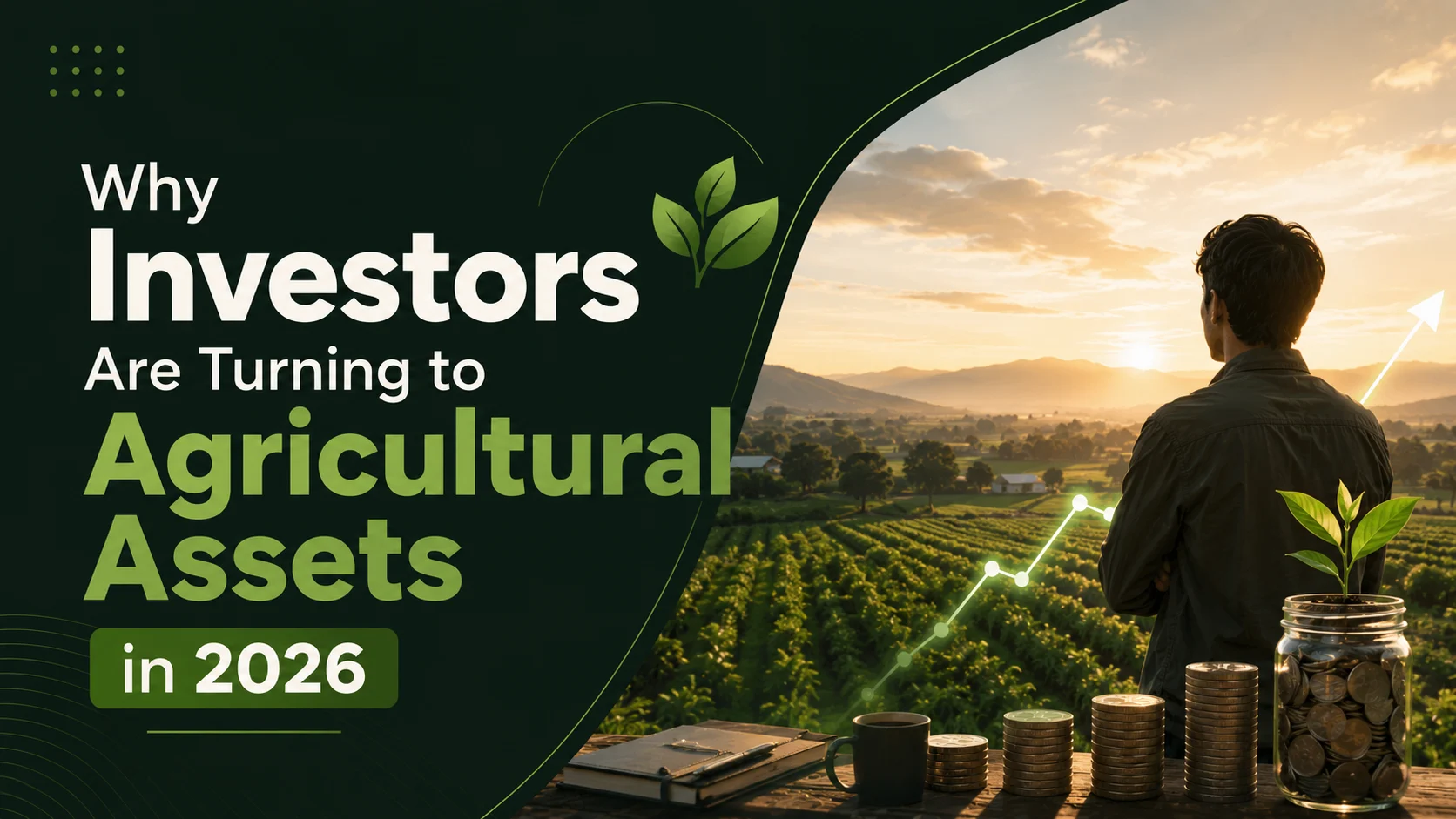
This is one reason why agricultural assets in India are attracting renewed attention in 2026.
Not because agriculture suddenly became fashionable.
But because modern investors are beginning to rethink what meaningful ownership actually looks like.
What Are Agricultural Assets?
The phrase “agricultural assets” can sound technical, but the idea itself is simple.
Agricultural assets typically include:
- farmland,
- orchards,
- managed agricultural ecosystems,
- and land-linked farming operations.
Unlike purely digital or speculative assets, these are connected to physical systems:
- land,
- cultivation,
- food production,
- and environmental cycles.
That physical connection changes how people emotionally relate to ownership.
Because agriculture is not abstract.
It is visible.
Tangible.
Rooted in the real world.
And in an increasingly digital economy, that distinction has become surprisingly important.
Why 2026 Feels Different for Investors
Every investment era has a psychological mood behind it.
The current mood feels different from the hyper-aggressive optimism of previous years.
People are more cautious now.
More reflective.
More selective about where they place long-term trust.
There is growing awareness around:
- economic uncertainty,
- climate discussions,
- urban burnout,
- and overdependence on purely financialized systems.
As a result, many investors are quietly shifting toward ownership experiences that feel:
- more understandable,
- more grounded,
- and less emotionally volatile.
This does not mean traditional investments are disappearing.
It simply means the definition of value is expanding.
And agriculture is increasingly entering that conversation.
The Return of Tangible Ownership
For decades, modern wealth became progressively intangible.
People own:
- stocks they never physically see,
- digital currencies,
- virtual ecosystems,
- cloud-based everything.
And while convenience increased, something else decreased:
👉 emotional connection to ownership.
This is why land-backed assets are regaining relevance.
Farmland represents something ancient in the human psyche:
- permanence,
- continuity,
- and physical reality.
You can stand on it.
Walk through it.
Experience it directly.
That creates a fundamentally different emotional relationship compared to assets that only exist on screens.
This growing preference for tangible investments in India is one of the biggest undercurrents shaping modern agricultural interest.
Why Agricultural Assets Feel More Grounded
Agricultural assets move differently from fast-paced speculative systems.
An orchard does not respond to social media cycles.
Land does not fluctuate emotionally every hour.
Agriculture operates through seasons, patience, and continuity.
And for many modern investors, that slower rhythm feels increasingly attractive.
Particularly in a world where:
- attention is fragmented,
- volatility is constant,
- and burnout has become normalized.
Agricultural ownership represents a different philosophy entirely.
Not urgency.
But groundedness.
The Rise of Managed Farmland Models
One of the biggest reasons agriculture is becoming more accessible in 2026 is the evolution of managed farmland investment models.
Traditionally, owning farmland required:
- local agricultural expertise,
- operational management,
- labor coordination,
- and physical involvement.
That created friction for urban professionals and modern investors.
Managed farmland ecosystems changed that dynamic.
Today, many structured agricultural models separate:
👉 ownership
from
👉 daily farming operations.
This allows people to participate in:
- agricultural ecosystems,
- orchard ownership,
- and nature-connected assets
without needing to become full-time farmers themselves.
That shift is extremely important because it transforms agriculture from something operationally intimidating into something structurally approachable.
Sustainability Is Becoming Economically Relevant
There was a time when sustainability was treated mostly as branding language.
That phase is ending.
Today, sustainability is increasingly tied to:
- resource management,
- climate resilience,
- consumer behavior,
- and long-term economic relevance.
This is why sustainable investments in India are attracting deeper interest across sectors.
Agriculture naturally enters that discussion because it intersects directly with:
- food systems,
- land stewardship,
- water usage,
- and environmental continuity.
Particularly when modern agricultural ecosystems use:
- scientific cultivation methods,
- efficient irrigation systems,
- and structured farming practices,
the conversation around agriculture shifts from “traditional industry” to “future-relevant ecosystem.”
And that perception matters enormously.
Why Modern Investors Are Looking Beyond Traditional Assets
Many investors today are not abandoning traditional assets.
They are simply becoming more diversified in how they think about ownership.
The conversation is no longer only about:
- returns,
- growth rates,
- or market timing.
Increasingly, people also care about:
- emotional stability,
- long-term alignment,
- and the quality of the ownership experience itself.
This explains why alternative categories such as:
- farmland ownership,
- managed orchards,
- and agricultural ecosystems
are entering modern portfolio conversations more frequently.
Not because they replace everything else.
But because they offer something psychologically different.
The Emotional Side of Agricultural Ownership
This part rarely gets discussed openly.
But it may actually be the most important reason behind the rise of agricultural assets.
People are tired.
Tired of:
- hyper-speed culture,
- digital overstimulation,
- and ownership experiences that feel disconnected from reality.
Agriculture represents something slower and more human.
An orchard grows gradually.
Land matures quietly.
Nature operates through patience rather than urgency.
That emotional contrast feels deeply appealing to many investors in 2026.
Especially millennials and younger professionals who increasingly value:
- intentional living,
- sustainability,
- and meaningful ownership.
What Smart Buyers Are Evaluating Before Entering the Space
As agricultural assets become more visible, buyers are also becoming more informed.
The strongest investors today are paying attention to:
- land transparency,
- operational quality,
- ecosystem structure,
- and long-term sustainability.
They are asking:
- Who manages the land?
- How transparent is the system?
- Is the ownership structure clear?
- Does the ecosystem feel thoughtfully designed?
And honestly, these are healthy questions.
Because agriculture should never be approached casually.
The strongest agricultural ecosystems are built around:
- clarity,
- patience,
- and operational integrity.
Where Agricultural Ecosystems Are Quietly Evolving
One of the more interesting developments today is the emergence of platforms focused on combining:
- land-backed ownership,
- professional farming management,
- and sustainable agricultural systems.
Not through aggressive investment language, but through ecosystem thinking.
This is where platforms like Mangofolks by Konkan Estate quietly reflect the direction in which the category is evolving.
Their approach toward:
- managed mango orchards,
- structured farming systems,
- transparent operational practices,
- and scientific methods such as UHDP farming
aligns with what many modern investors increasingly value:
👉 ownership experiences that feel both meaningful and manageable.
And perhaps that is the deeper story behind agricultural assets in 2026.
Not simply growth.
But reconnection.
To land.
To systems that feel tangible.
And to ownership that exists beyond abstraction.
Key Takeaways
- Investors in 2026 are increasingly drawn toward tangible, grounded assets
- Agricultural assets combine land ownership, sustainability, and long-term thinking
- Managed farmland models are making agriculture more accessible to urban investors
- Emotional connection and ownership psychology are becoming important investment factors
- Structured agricultural ecosystems are reshaping how farmland ownership is perceived
FAQs
1. What are agricultural assets?
Agricultural assets include farmland, orchards, and professionally managed agricultural ecosystems connected to land and cultivation.
2. Why are investors interested in farmland in 2026?
Many investors are seeking tangible, sustainable, and long-term ownership experiences beyond purely digital or speculative assets.
3. What is managed farmland?
Managed farmland refers to agricultural land professionally operated through structured farming systems.
4. Is agriculture considered a sustainable asset category?
Agriculture is increasingly associated with sustainability because of its relationship with land, food systems, and environmental stewardship.
5. What should people evaluate before exploring agricultural ownership?
Transparency, operational structure, land legitimacy, and long-term ecosystem quality are all important considerations.
Closing Thought
The future of investing may not belong entirely to the fastest-moving assets.
In many ways, the next era of ownership seems to be moving toward something quieter:
- tangible systems,
- meaningful assets,
- and long-term grounded value.
Agricultural assets sit naturally within that shift.
Not because they promise instant excitement.
But because they offer something increasingly rare in modern life:
👉 the feeling that what you own is connected to something real.