

Something Is Quietly Changing in the Way People Think About Wealth
For years, success looked fast.
Fast money.
Fast markets.
Fast exits.
Fast growth.
Ownership became increasingly digital:
- apps,
- dashboards,
- online portfolios,
- virtual assets.
And somewhere along the way, many people began feeling disconnected from the very things they were working so hard to build.
Because modern wealth often feels strangely intangible.
You can see it on a screen.
Track it obsessively.
Watch it fluctuate by the second.
But can you actually feel connected to it?
That question is becoming more important than most people realize.
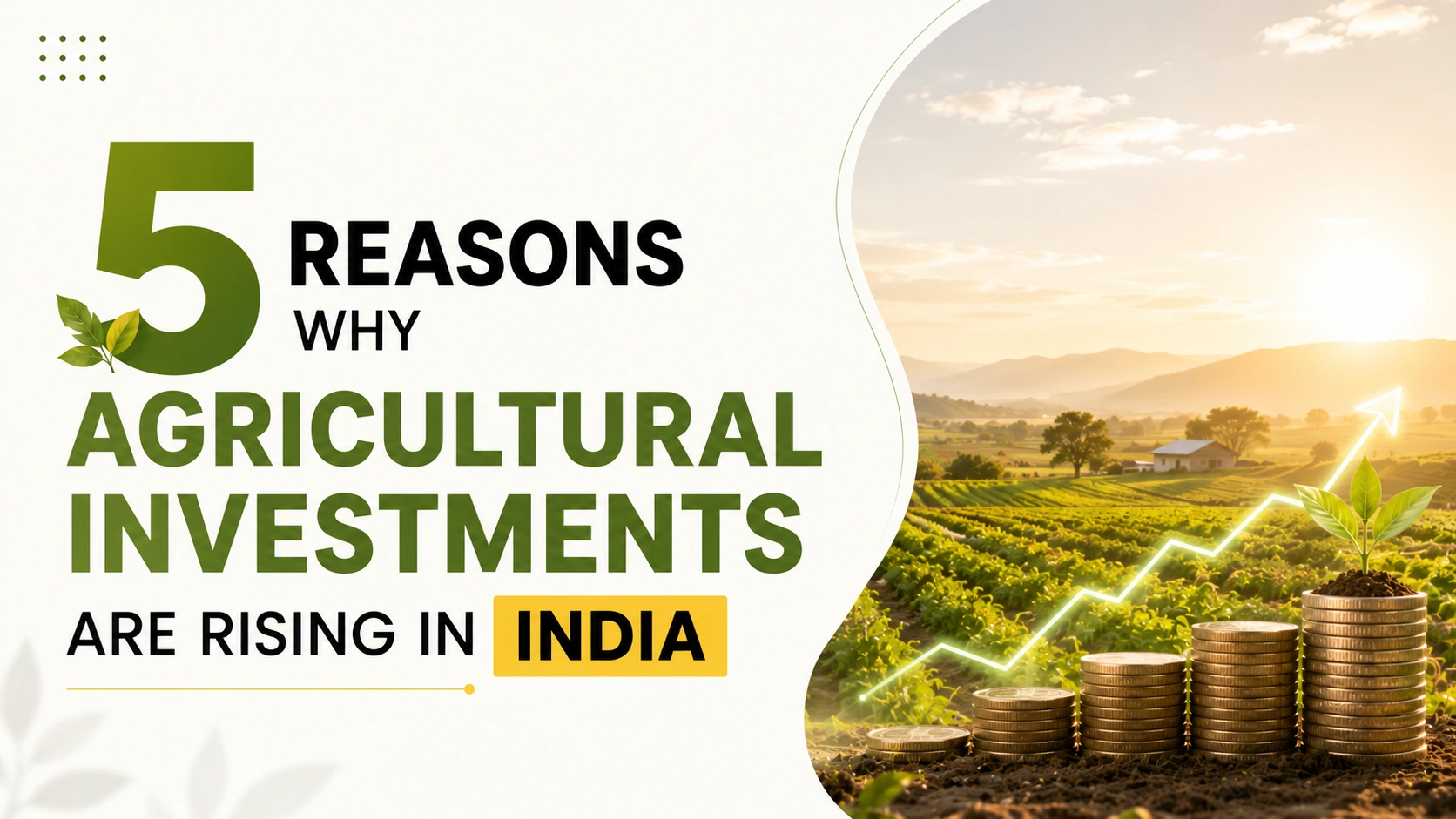
And perhaps that is one reason why agricultural investments in India are quietly attracting attention again.
Not only because of land.
Not only because of farming.
But because agriculture represents something modern life increasingly lacks:
👉 tangibility, continuity, and groundedness.
Why Agriculture Is Re-entering Modern Conversations
There was a time when agriculture felt disconnected from aspirational modern life.
People associated it with:
- rural economies,
- traditional livelihoods,
- and older generations.
Today, the conversation feels different.
Modern interest in:
- managed farmland,
- sustainable land ownership,
- and nature-connected assets
is growing because the emotional relationship people have with ownership itself is changing.
People are no longer only asking:
“What grows quickly?”
They are asking:
“What actually feels meaningful to own?”
And agriculture sits in a very interesting position within that conversation.
Because unlike many modern assets, it remains deeply connected to:
- land,
- ecosystems,
- food systems,
- and long-term thinking.
Reason #1: People Are Craving Tangible Ownership
This is probably the biggest shift of all.
Many people are beginning to crave:
Something physical.
Something rooted.
Something they can actually experience.
This is where farmland ownership in India becomes emotionally compelling.
Land exists beyond trends.
It can be visited.
Walked through.
Understood physically.
And psychologically, that creates a very different relationship compared to purely digital or speculative ownership experiences.
Especially for millennials and younger professionals, this idea of tangible ownership feels increasingly valuable.
Reason #2: Sustainability Is Becoming a Real Priority
There’s an important difference between performative sustainability and meaningful sustainability.
People today are becoming more conscious about:
- climate realities,
- food systems,
- ecological impact,
- and long-term environmental balance.
But they are also becoming skeptical of empty branding language.
They want sustainability that feels:
- visible,
- practical,
- and connected to real systems.
Agriculture naturally enters that conversation because it sits directly at the intersection of:
- land,
- water,
- food production,
- and environmental stewardship.
Particularly when modern farming systems focus on:
- efficient irrigation,
- scientific cultivation methods,
- and long-term land care,
agriculture begins to feel aligned with a broader shift toward sustainable investments in India.
Not as a trend.
But as part of a larger cultural transition.
Reason #3: Managed Farmland Is Making Agriculture More Accessible
Traditionally, farmland ownership came with operational complexity.
You needed:
- local knowledge,
- farming expertise,
- time,
- labor management,
- and ongoing supervision.
For urban professionals, that made agriculture feel distant and impractical.
That’s changing.
The rise of managed farmland models in India is making agricultural participation more accessible through professionally operated systems.
In many structured ecosystems:
- farming operations are handled by experienced teams,
- cultivation follows planned processes,
- and owners participate without needing to manage daily agricultural work themselves.
This distinction matters.
Because it transforms agriculture from:
👉 an operational burden
into:
👉 a more structured ownership experience.
And for modern audiences balancing demanding lifestyles, that accessibility changes how agriculture is perceived entirely.
Reason #4: Modern Investors Are Looking Beyond Traditional Assets
Another important shift is happening quietly.
People are becoming more thoughtful about concentration.
For years, the default pathways looked predictable:
- urban real estate,
- equity markets,
- traditional financial products.
Now, more people are exploring:
- alternative assets,
- land-backed ownership,
- and nature-connected ecosystems.
Not because traditional assets are disappearing.
But because diversification today is increasingly psychological as well as financial.
People want ownership experiences that:
- feel different,
- behave differently,
- and exist outside the emotional intensity of constantly fluctuating markets.
This is one reason agriculture-backed assets are attracting attention among people seeking:
- long-term perspective,
- slower ownership cycles,
- and real-world connection.
Reason #5: Agriculture Feels Emotionally Grounding in a Hyper-Digital World
This reason is harder to quantify, but impossible to ignore.
Modern life is overstimulating.
Cities are louder.
Work is faster.
Attention is fragmented constantly.
And in response, many people are gravitating toward experiences and assets that feel calming, slower, and more rooted.
This is why orchards, farmland, and nature-connected ownership carry emotional appeal far beyond economics.
They symbolize:
- continuity,
- patience,
- and a different relationship with time itself.
An orchard does not operate on urgency.
It grows through:
- seasons,
- cycles,
- consistency,
- and care.
There is something deeply reassuring about that in a culture obsessed with immediacy.
The Shift From Speculation to Meaningful Ownership
One of the most interesting things happening today is that ownership itself is becoming more emotional.
People increasingly care about:
- what they own,
- why they own it,
- and how it fits into the life they want to build.
This shift matters because it changes the appeal of agriculture entirely.
Farmland is no longer viewed only through the lens of productivity.
It is also being viewed through the lens of:
- sustainability,
- groundedness,
- and intentional ownership.
That emotional layer is important.
Because modern asset decisions are no longer purely rational.
They are deeply psychological too.
What Smart Buyers Are Paying Attention To
As agricultural ecosystems evolve, buyers are becoming more informed and selective.
The strongest interest today is often directed toward models that prioritize:
- transparency,
- structured management,
- operational clarity,
- and thoughtful land stewardship.
People increasingly want to understand:
- how the land is managed,
- who operates the ecosystem,
- and whether the structure feels sustainable long term.
And honestly, that’s a healthy direction for the category.
Because land ownership should feel:
- intentional,
- informed,
- and responsibly structured.
Where Modern Agricultural Ecosystems Are Evolving
One of the more interesting developments in this space is the emergence of platforms attempting to combine:
- agricultural ownership,
- professionally managed systems,
- and sustainability-oriented thinking.
Not through aggressive promises, but through ecosystem design.
This is where models like Mangofolks by Konkan Estate quietly reflect the broader evolution of modern agricultural ownership.
Their focus on:
- managed mango orchards,
- structured farming systems,
- and scientific methods like UHDP farming
aligns with what many modern buyers increasingly value:
👉 ownership experiences that feel both meaningful and manageable.
And perhaps that is the deeper story behind the rise of agricultural investments today.
Not simply the search for returns.
But the search for ownership that still feels connected to something real.
Key Takeaways
- Agricultural investments in India are rising due to changing attitudes toward ownership and sustainability
- Modern buyers increasingly value tangible, land-backed assets
- Managed farmland models are making agriculture more accessible to urban audiences
- Sustainability and emotional grounding are becoming important factors in ownership decisions
- Structured, transparent agricultural ecosystems are shaping the future of modern farmland experiences
FAQs
1. Why are agricultural investments becoming popular in India?
Growing interest in tangible ownership, sustainability, and long-term land-backed assets is driving attention toward agriculture.
2. What is managed farmland?
Managed farmland refers to agricultural land professionally operated through structured farming systems.
3. Why do younger investors find farmland appealing?
Many younger buyers value sustainability, tangible ownership, and slower, more grounded asset experiences.
4. Is agriculture considered a sustainable asset category?
Agriculture is increasingly associated with sustainability because of its connection to food systems, land stewardship, and environmental awareness.
5. What should people evaluate before exploring farmland ownership?
Transparency, operational structure, land legitimacy, and long-term ecosystem quality are all important considerations.
Closing Thought
The rise of agricultural investments in India is not only about land.
It reflects something larger happening culturally.
People are beginning to question:
- speed,
- hyper-digital ownership,
- and the emotional emptiness of constantly chasing abstraction.
And in that search for something more grounded, agriculture feels quietly relevant again.
Not because it is fashionable.
But because it reconnects ownership to something timeless:
👉 the physical world itself.