

The Generation That Grew Up Digitally Is Craving Something Real
There’s a strange contradiction at the heart of the millennial experience.
This is the generation that embraced the internet completely.
Built careers online.
Socialized online.
Consumed endlessly online.
And yet, increasingly, many millennials feel disconnected from anything tangible.
Their lives move fast:
- notifications,
- deadlines,
- subscriptions,
- screens,
- endless scrolling.
Even wealth itself has become abstract.
Investments sit inside apps.
Ownership exists inside dashboards.
Success often feels measurable, but not necessarily meaningful.
And somewhere beneath all that convenience, a quieter desire has started emerging:
👉 the desire for something real.
Not louder.
Not trendier.
Just more grounded.
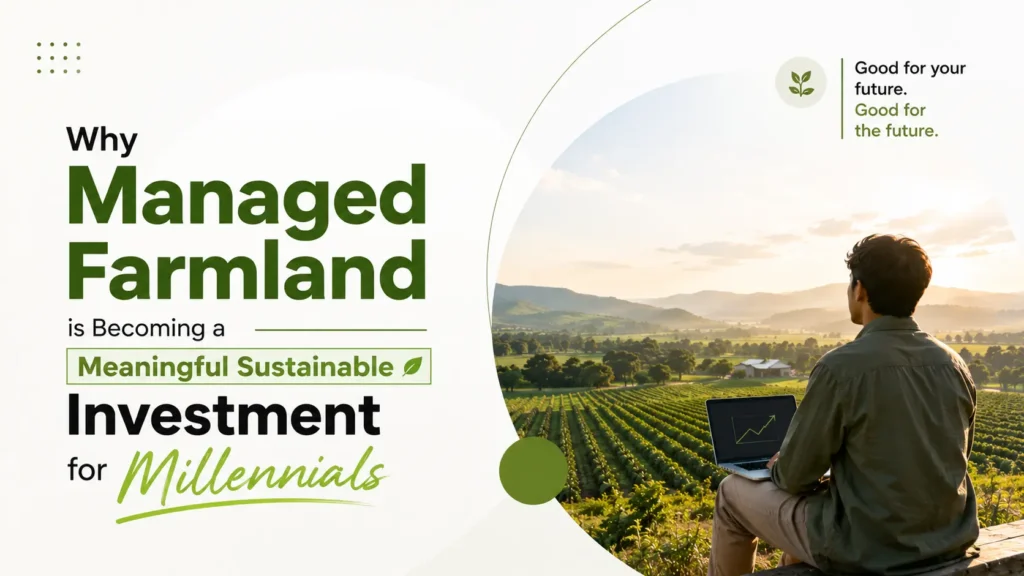
This is one of the reasons managed farmland investment is beginning to resonate with millennials in a way that feels surprisingly emotional.
Because it offers something modern life often struggles to provide:
- tangibility,
- slowness,
- permanence,
- and connection to the physical world.
Why Millennials Think About Wealth Differently
Previous generations often approached wealth through stability first.
Millennials grew up during:
- financial uncertainty,
- rapid technological change,
- economic volatility,
- and constant market narratives.
As a result, many millennials now think about ownership differently.
They are not only asking:
- “Will this grow?”
They are also asking:
- “Does this align with how I want to live?”
- “Does this feel sustainable?”
- “Does this make sense long term?”
- “Does this feel connected to reality?”
That shift matters.
Because it changes what becomes attractive as an asset.
What Managed Farmland Actually Means
At its core, managed farmland refers to agricultural land that is professionally maintained and operated through structured farming systems.
In many modern models:
- the farming operations are handled by experienced teams,
- agricultural processes are managed professionally,
- and owners participate in the ecosystem without needing to become full-time farmers themselves.
This creates a bridge between:
- land ownership,
- sustainable agriculture,
- and modern lifestyles.
For millennials who are:
- city-based,
- professionally busy,
- or globally mobile,
that structure makes the concept far more accessible.
And importantly, it shifts farmland from being:
👉 operationally overwhelming
to:
👉 thoughtfully manageable.
Why Sustainability Feels Personal to Millennials
For many millennials, sustainability is not simply a trend or a marketing keyword.
It is tied to lived anxiety.
This generation has watched:
- climate conversations intensify,
- urban environments become more exhausting,
- and discussions around food systems, water, and ecological balance become impossible to ignore.
Which means sustainability no longer feels abstract.
It feels personal.
But there’s another interesting shift happening too.
Millennials increasingly prefer sustainability that feels:
- tangible,
- experiential,
- and integrated into real life.
Not performative.
And this is where sustainable farmland ownership becomes emotionally compelling.
Because land, orchards, and agriculture represent sustainability in a visible, grounded way.
You can physically experience it.
You can visit it.
You can understand it beyond a slogan.
The Emotional Shift Toward Tangible Ownership
One of the least discussed investment trends today is the emotional fatigue caused by purely digital ownership.
People own:
- digital portfolios,
- virtual subscriptions,
- cloud-based everything.
But increasingly, many crave:
- physical connection,
- natural environments,
- and assets that feel rooted in something beyond algorithms.
This is why conversations around:
- farmland ownership India,
- nature-connected assets,
- and land-backed sustainable investments
are quietly becoming more relevant among younger audiences.
Not because farmland is “new.”
But because it feels fundamentally different from the hyper-accelerated systems surrounding modern life.
Why Managed Farmland Fits the Modern Lifestyle
Traditional farming requires:
- time,
- expertise,
- operational involvement,
- and physical presence.
Most millennials do not realistically have the bandwidth for that.
What they are looking for instead are systems that:
- reduce operational friction,
- create transparency,
- and make participation simpler without disconnecting them from the experience itself.
This is where professionally managed agricultural ecosystems become appealing.
The strongest models today focus on:
- operational structure,
- visibility,
- scientific farming methods,
- and long-term sustainability thinking.
Not hype.
Not exaggerated promises.
Just thoughtful systems.
The Rise of “Slow Wealth” and Long-Term Thinking
There’s a growing rejection of hyper-speed culture happening quietly among millennials.
Not everyone wants:
- constant volatility,
- aggressive speculation,
- or the emotional exhaustion of endlessly chasing the next thing.
More people are beginning to appreciate what could be called:
👉 slow wealth.
Assets that:
- mature gradually,
- feel grounded,
- and encourage long-term thinking.
And in many ways, orchards symbolize that philosophy perfectly.
They are not built for instant gratification.
They evolve through:
- seasons,
- patience,
- systems,
- and continuity.
That rhythm feels increasingly attractive in a culture obsessed with immediacy.
What Millennials Are Really Looking for in an Asset
If you step back, most millennials are not just searching for “returns.”
They are searching for alignment.
An asset today has to feel:
- emotionally intelligent,
- environmentally relevant,
- and structurally trustworthy.
That is why the strongest sustainable asset conversations today are not purely financial.
They sit at the intersection of:
- ownership,
- lifestyle,
- sustainability,
- and identity.
A Simple Framework Millennials Use (Even If They Don’t Realize It)
Modern buyers often evaluate opportunities through four quiet questions:
1. Does this feel real?
Can I physically understand what I own?
2. Does this align with my values?
Does it reflect sustainability, longevity, and thoughtfulness?
3. Does this fit my lifestyle?
Can this exist without overwhelming my daily life?
4. Does this feel future-relevant?
Will this still make sense years from now?
Interestingly, managed farmland often intersects with all four.
The Importance of Transparency and Structured Systems
Millennials are skeptical consumers.
They research deeply.
Question narratives.
Value transparency.
Which means modern farmland ecosystems cannot operate like old-world opaque land deals.
Today’s buyers increasingly expect:
- visibility,
- operational clarity,
- documentation awareness,
- and communication.
That expectation is reshaping the category itself.
The stronger managed farmland models are not simply offering land.
They are building:
- systems,
- processes,
- and long-term ecosystems around ownership.
Where Managed Agricultural Models Are Evolving
One of the more interesting developments today is the rise of platforms attempting to combine:
- sustainable agriculture,
- professionally managed operations,
- and nature-connected ownership experiences.
Not as aggressive “investment products,” but as thoughtfully designed ecosystems.
This is where models like Mangofolks by Konkan Estate become interesting to observe.
Their focus on:
- managed mango orchards,
- structured farming systems,
- scientifically guided cultivation methods like UHDP farming,
- and transparent operational processes,
aligns closely with what many millennials increasingly value:
👉 meaningful ownership without unnecessary complexity.
And perhaps that is the larger shift happening beneath all of this.
People are no longer only asking:
“What can I own?”
They are asking:
“What kind of ownership actually feels worth having?”
Key Takeaways
- Millennials increasingly value tangible, grounded assets over purely abstract ownership
- Managed farmland combines sustainability, structure, and nature-connected ownership
- Modern buyers are prioritizing transparency and thoughtful systems
- Sustainable agricultural ecosystems are becoming emotionally and culturally relevant
- Managed farmland aligns with the growing shift toward long-term, intentional ownership
Managed farmland refers to agricultural land that is professionally operated, maintained, and optimized through structured farming systems. Learn more about managed farmland investment models.
Many millennials prefer investments that combine financial potential with sustainability, tangible ownership, and environmental responsibility. Explore more about green investment opportunities.
Yes. Many managed farmland models focus on structured agricultural practices, responsible farming methods, and long-term land stewardship.
Farmland appeals to younger investors because it combines physical ownership, a connection with nature, sustainability, and long-term wealth creation.
Important factors include transparency, operational structure, clear title land verification, farming practices, and long-term ecosystem quality.
Closing Thought
Perhaps the most interesting thing about modern ownership is this:
The more digital life becomes,
the more people begin craving things that feel undeniably real.
Not louder.
Not faster.
Not endlessly optimized.
Just real.
Land has always carried that feeling quietly.
And maybe that is why managed farmland resonates with so many millennials today.
Not simply because it is sustainable.
But because it reconnects ownership to something modern life has slowly drifted away from:
👉 a sense of groundedness.