

The Shift That’s Already Happening
The most interesting investment trends rarely announce themselves loudly.
They don’t arrive with headlines or urgency.
They move quietly—almost invisibly—until suddenly, they feel obvious.
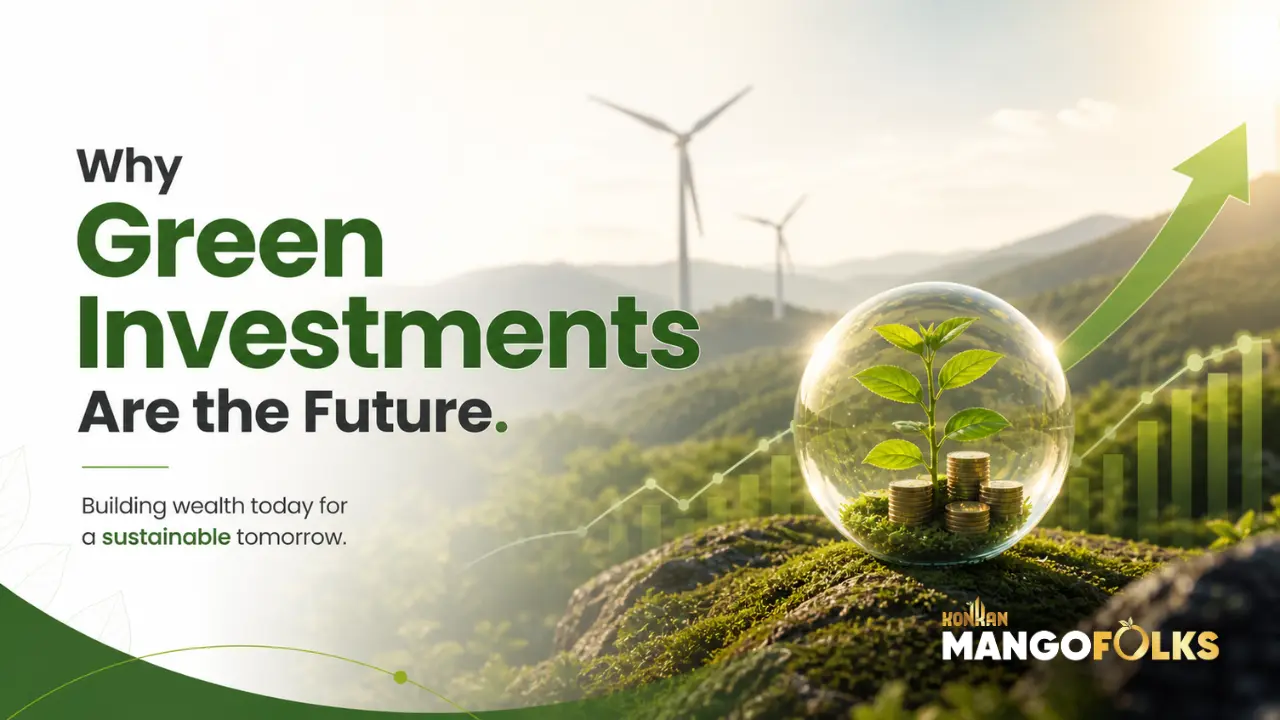
Green investments are in that phase right now.
Not because people suddenly became environmentally conscious.
Not because sustainability became fashionable.
But because something deeper is happening:
👉 The definition of value is changing.
Assets are no longer judged only by returns.
They are being evaluated by resilience, longevity, and real-world impact.
And when you look at investing through that lens,
green investments stop looking like alternatives…
…and start looking like inevitabilities.
What Are Green Investments, Really?
Strip away the jargon, and green investments are simply:
👉 Investments that generate returns while supporting environmental sustainability.
This includes:
- Renewable energy
- Sustainable agriculture
- Eco-conscious infrastructure
- Climate-aligned assets
But here’s the mistake most people make.
They assume green investing is about:
- Lower returns
- Ethical compromise
- Long-term sacrifice
That used to be true.
It isn’t anymore.
Why This Isn’t Just About Sustainability
If this were only about “doing good,” green investments would remain a niche.
They haven’t.
Because the real driver behind sustainable investing in India and globally is not morality.
It’s risk management and future-proofing.
Think about it:
- Climate volatility affects supply chains
- Resource scarcity impacts industries
- Regulatory pressure is increasing globally
Which means:
👉 Assets that ignore environmental realities are becoming riskier.
And assets aligned with them?
They are becoming more valuable.
The Economics Behind Green Investing
At some point, every investment conversation comes down to one question:
👉 “Does it make financial sense?”
Green investments are increasingly answering that with a quiet, confident yes.
Here’s why:
1. Long-Term Stability
Green assets tend to be:
- Less speculative
- More tied to real-world demand
2. Regulatory Tailwinds
Governments are:
- Incentivizing sustainable practices
- Penalizing unsustainable ones
3. Consumer Shift
Markets are moving toward:
- Ethical consumption
- Traceable sourcing
- Sustainable supply chains
4. Resource Efficiency
Better use of:
- Water
- Land
- Energy
Leads to:
👉 Lower long-term costs
👉 Higher efficiency
This is why green investment opportunities India are expanding—not as trends, but as structural shifts.
Where Traditional Investments Are Starting to Fall Short
This isn’t about replacing traditional investments.
It’s about recognizing their limitations.
Stocks:
- Volatile
- Sentiment-driven
Real Estate:
- Saturated in many regions
- Dependent on cycles
Fixed Income:
- Limited upside
Now compare that with assets that:
- Produce tangible output
- Appreciate over time
- Align with long-term global trends
This is where eco-friendly investments begin to stand out.
The Rise of Real, Asset-Backed Green Investments
There’s a difference between:
- The idea of green investing
- And real, asset-backed green investments
The latter includes:
- Farmland
- Forestry
- Renewable infrastructure
Why?
Because these assets are:
- Tangible
- Productive
- Linked to essential demand
Among these, one category is gaining quiet attention:
👉 Agriculture
Why Agriculture is Quietly Becoming a Green Asset Class
At first glance, agriculture doesn’t feel like a “modern investment.”
It feels old. Traditional. Familiar.
But look closer.
Agriculture sits at the intersection of:
- Food security
- Sustainability
- Land value
- Climate resilience
And when structured properly, it offers:
- Passive income from agriculture in India
- Long-term land appreciation
- Environmentally aligned output
This is why farmland investment in India is increasingly being viewed as a green investment—not just an alternative one.
Particularly when:
- Scientific methods (like UHDP farming) are used
- Water usage is optimized
- Yield is increased per acre
👉 It becomes both efficient and sustainable.
Risks, Misconceptions, and What to Watch
Let’s be clear.
Not everything labeled “green” is actually valuable.
Common misconceptions:
❌ “Green means lower returns”
Not necessarily. Many green assets outperform due to structural demand.
❌ “All green investments are safe”
No. Poor execution still leads to poor outcomes.
❌ “Sustainability alone guarantees success”
It doesn’t. Economics still matter.
Real risks include:
- Poor management
- Lack of transparency
- Overhyped projections
👉 The asset matters. But the system matters more.
A Framework to Evaluate Green Investments
Before you invest, ask:
The GREEN Framework
G – Ground Reality
Is the asset tangible and productive?
R – Returns Structure
Where is income actually coming from?
E – Efficiency
Is the system optimized for yield and sustainability?
E – Ecosystem Fit
Does it align with long-term environmental trends?
N – Narrative vs Reality
Is this real value—or just good storytelling?
Where This Is Heading Next
Green investments are not a passing phase.
They are part of a broader transition:
👉 From speculative value → real value
👉 From short-term gains → long-term resilience
And as this transition continues,
assets that combine:
- Sustainability
- Productivity
- Structure
will likely define the next decade of investing.
A Quiet Observation Worth Noticing
If you look closely at where smart capital is moving, you’ll notice something.
It’s not just chasing returns.
It’s chasing:
- Stability
- Tangibility
- Systems that make sense
This is where certain models begin to stand out—not loudly, but meaningfully.
Platforms like Mangofolks by Konkan Estate, for instance, are not positioning themselves as “green investments” in the conventional sense.
But what they do aligns closely with it:
- Managed mango orchards
- Scientific, high-efficiency farming methods
- Land-backed asset ownership
- Long-term agricultural output
Which, in essence, reflects what green investing is actually about:
👉 Creating value without disconnecting from reality
Key Takeaways
- Green investments are driven by structural shifts, not trends
- Sustainability and profitability are no longer opposites
- Real, asset-backed investments are gaining importance
- Agriculture is emerging as a key green asset class
- Systems and execution determine success
Green investments are assets that generate financial returns while supporting environmental sustainability and responsible resource use.
Yes, many green investments offer strong long-term returns driven by increasing demand, policy support, and global sustainability trends.
Yes. When managed sustainably, farmland becomes a productive and eco-friendly investment that supports both income generation and environmental balance.
Common examples include renewable energy, sustainable agriculture, and eco-conscious infrastructure projects.
They align with global sustainability trends, reduce long-term risk, and create durable value as environmental and economic priorities converge.
Closing Thought
The future of investing is not just about chasing what grows fast.
It’s about understanding what lasts.
And increasingly, the assets that last are the ones that:
- Work with nature
- Adapt to change
- And create value without exhausting the system they depend on
Green investments aren’t the future because they sound good.
They’re the future because, slowly and quietly…
👉 they’re becoming the only kind that make long-term sense.