

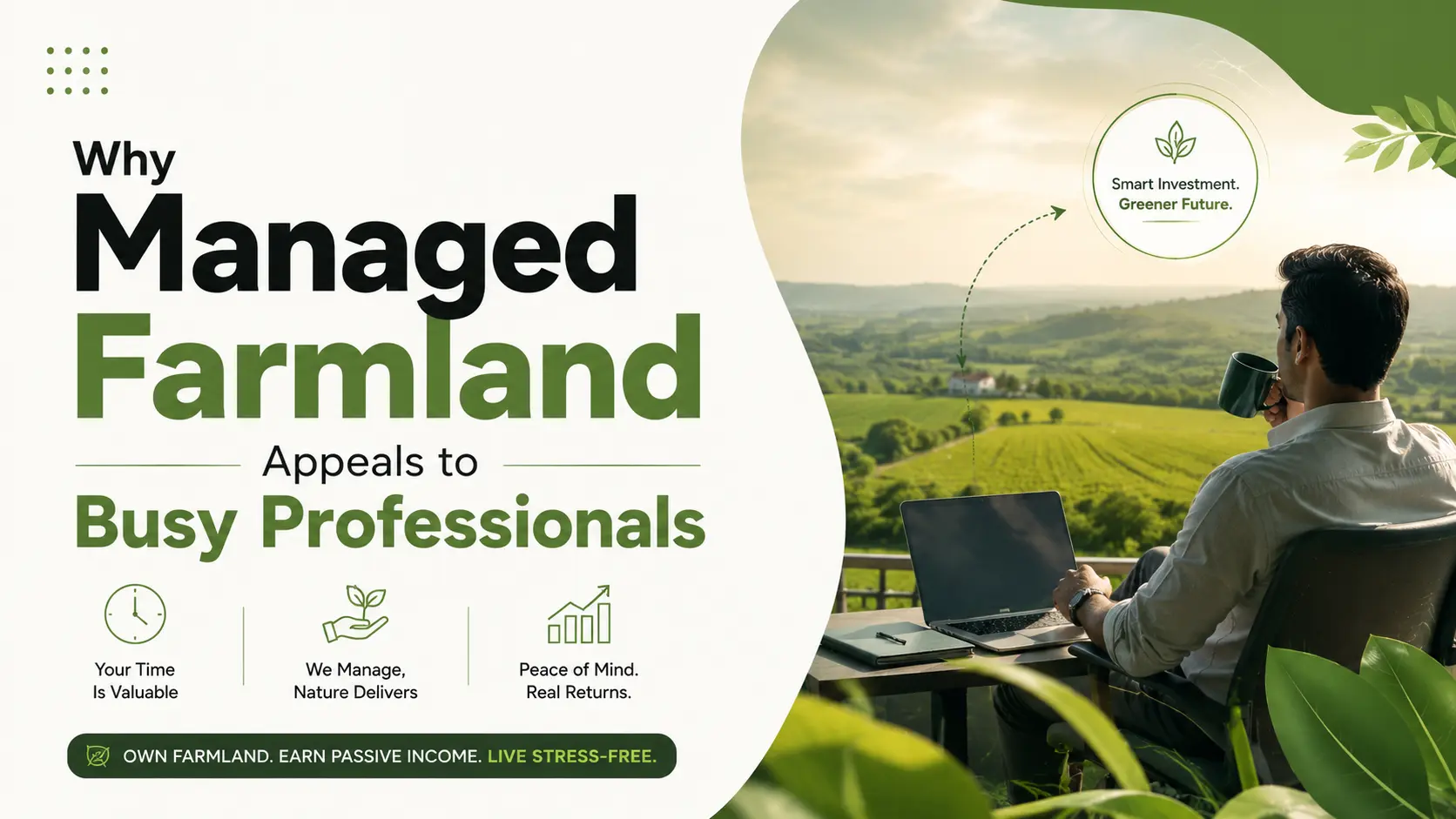
Success has an interesting way of creating new problems.
Early in a career, the challenge is usually financial. People focus on earning more, building stability, and creating opportunities. As careers progress, however, a different challenge begins to emerge. Time becomes increasingly scarce.
The entrepreneur managing a growing business, the executive leading large teams, the consultant constantly travelling between cities, and the professional balancing career ambitions with family responsibilities often share the same frustration: they have the resources to pursue meaningful opportunities, but very little time to actively manage them.
This reality is quietly reshaping the way many people think about ownership.
For decades, farmland has been viewed as one of the most tangible assets a person can own. Unlike digital investments or financial instruments that exist primarily on screens, productive agricultural land is real. It can be visited, experienced, and understood in a deeply physical way.
Yet traditional farmland ownership came with a significant barrier. It demanded involvement. Understanding crops, managing operations, coordinating labour, monitoring cultivation, and dealing with countless agricultural variables often made farmland feel inaccessible to people with demanding careers.
Managed farmland is changing that equation.
It is not simply making farmland easier to own. It is making it relevant to a generation of professionals whose greatest constraint is no longer capital, but time.
The Modern Professional’s Search for Meaningful Ownership
The world has become remarkably efficient at offering convenience.
Food arrives in minutes.
Meetings happen across continents.
Businesses can be managed from a smartphone.
Yet despite all this convenience, many professionals feel increasingly disconnected from the things they own.
Investment portfolios exist as numbers on a screen.
Financial products are often difficult to visualize.
Digital assets feel distant and abstract.
As a result, there is growing interest in assets that feel tangible, understandable, and connected to the real world.
Farmland occupies a unique position in this conversation.
It represents something fundamental. Productive land is tied to food, nature, and long-term utility. It exists outside the constant noise of market headlines and social media trends. While many assets derive value from perception, agricultural land derives value from its ability to support real-world productivity.
For busy professionals, this tangibility can be surprisingly appealing.
It creates a sense of ownership that feels grounded rather than purely transactional.
The Problem With Traditional Farmland Ownership
The appeal of farmland is easy to understand.
The logistics are another story entirely.
Imagine purchasing agricultural land independently. Suddenly, questions begin to appear from every direction.
How is the land maintained?
Who oversees cultivation?
How often should the farm be visited?
What happens during different growing seasons?
How are farming decisions made?
For someone whose calendar is already packed with professional commitments, these responsibilities can quickly become overwhelming.
Managed farmland addresses this challenge directly.
Instead of expecting every owner to become a farmer, professional agricultural teams handle day-to-day operations while owners remain connected to the land itself.
The result is a model that fits more naturally into modern lifestyles.
Ownership Without Operational Burden
There is a broader trend visible across many industries today.
People increasingly prefer access to expertise rather than attempting to become experts in every area themselves.
Instead, they rely on specialists.
Managed farming follows the same principle.
Agriculture is a specialised field requiring knowledge, experience, and consistent attention. Professional management allows owners to benefit from agricultural expertise without needing to dedicate their own lives to mastering every aspect of cultivation.
For professionals already focused on demanding careers, this shift is significant.
It transforms farmland from a potentially overwhelming responsibility into a structured ownership experience.
Why Nature Matters More Than Ever
Interestingly, the appeal of managed farmland is not purely financial.
In many cases, it is deeply personal.
Modern professional life is increasingly lived indoors.
Hours are spent in offices, airports, hotels, conference rooms, and in front of screens. While technology has improved productivity, it has also increased the distance between people and the natural world.
This helps explain why nature-focused experiences have become so desirable.
People seek weekends in the countryside.
They plan nature retreats.
They invest in outdoor experiences.
They search for opportunities to slow down.
Managed farmland offers something different.
It creates an ongoing relationship with a living landscape.
The land changes with the seasons.
Trees grow.
Orchards evolve.
The environment becomes something owners can engage with rather than simply observe.
For many busy professionals, that connection holds genuine value.
The Rise of Lifestyle-Aligned Investments
A noticeable shift is occurring in the way successful professionals evaluate opportunities.
The question is no longer simply:
Not:
“Will this generate returns?”
But:
“Does this align with the life I want to build?”
This subtle change is important.
People are looking for assets that reflect their values.
They want ownership that feels intentional.
They want experiences that complement their lifestyle.
They want investments that connect them to something meaningful.
Managed farmland often sits at the intersection of these desires.
It combines ownership, nature, sustainability, and professional management within a single ecosystem.
That combination is difficult to find elsewhere.
What Busy Professionals Actually Want
Contrary to popular belief, most professionals are not constantly chasing complexity.
If anything, they are trying to reduce it.
The most attractive opportunities tend to share a few common characteristics.
They are transparent.
They are understandable.
They are professionally managed.
They fit naturally into an already demanding schedule.
And perhaps most importantly, they provide a sense of confidence that the underlying system is functioning effectively.
This is where professionally managed agricultural ecosystems have gained attention.
Rather than requiring owners to oversee every detail, they create structured frameworks that allow participation without constant involvement.
A Different Way to Think About Farmland
One of the biggest misconceptions surrounding farmland is that ownership automatically means farming.
The reality is more nuanced.
Most people who explore managed farmland are not trying to leave their careers and become full-time cultivators.
They are not searching for another occupation.
They are searching for a different kind of asset.
One that feels connected to nature.
One that supports long-term thinking.
One that exists outside the purely digital economy.
Viewed through that lens, managed farmland becomes less about agriculture alone and more about modern ownership.
Why Managed Orchard Ecosystems Are Gaining Attention
Within the broader managed farming category, orchard-based models have become particularly compelling.
Unlike seasonal crops, orchards represent long-term agricultural ecosystems. They evolve over years rather than months and often encourage a more patient, stewardship-oriented mindset.
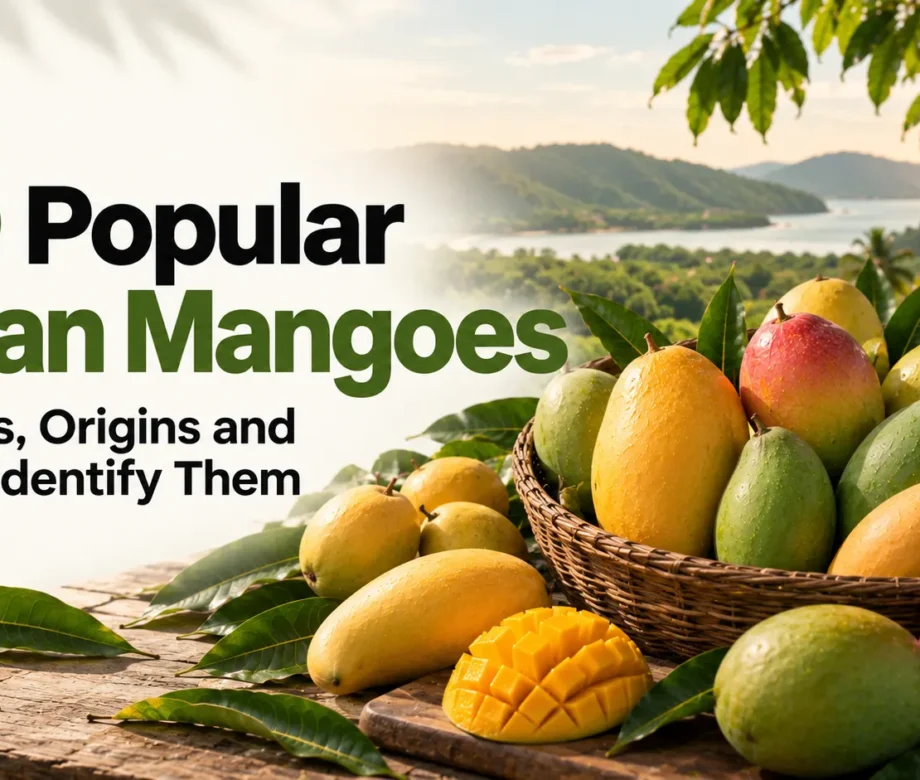
This is one reason managed mango orchards have attracted growing interest.
The concept combines professional orchard management with long-term agricultural planning, creating an ownership experience that aligns naturally with individuals who value sustainability, continuity, and connection to the land.
Not:
simply an asset.
But:
a meaningful relationship with a productive landscape.
The Bigger Shift Happening Beneath the Surface
Perhaps the growing appeal of managed farmland says something larger about our times.
For years, progress was associated with moving further away from the land.
Today, many people are discovering value in reconnecting with it.
Not because they want to abandon modern life.
Not because they want to become farmers.
But because they want ownership that feels real.
In an increasingly digital world, tangible experiences have become more valuable. In a world driven by speed, slower assets have become more attractive. And in a world overflowing with information, simplicity has become a luxury.
Managed farmland sits at the intersection of all three trends.
Which may explain why so many busy professionals are paying attention.
Key Takeaways
FAQs
Managed farmland is a model where agricultural land is professionally managed, allowing owners to remain connected to the asset without handling daily farming operations themselves.
It offers tangible ownership, professional management, and a connection to nature while fitting within busy schedules.
No. Professional agricultural teams typically oversee cultivation and operations.
No. Many people are drawn to the lifestyle, sustainability, and ownership experience alongside any potential financial considerations.
Managed mango orchards combine long-term agricultural stewardship, professional cultivation practices, and a strong connection to nature, making them attractive to modern professionals.