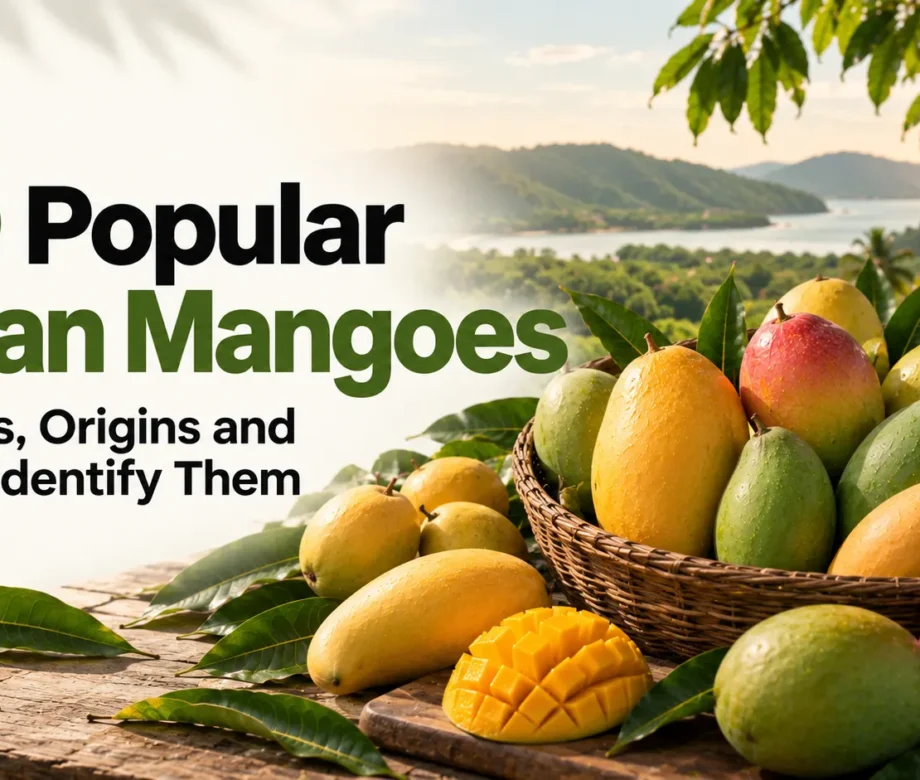


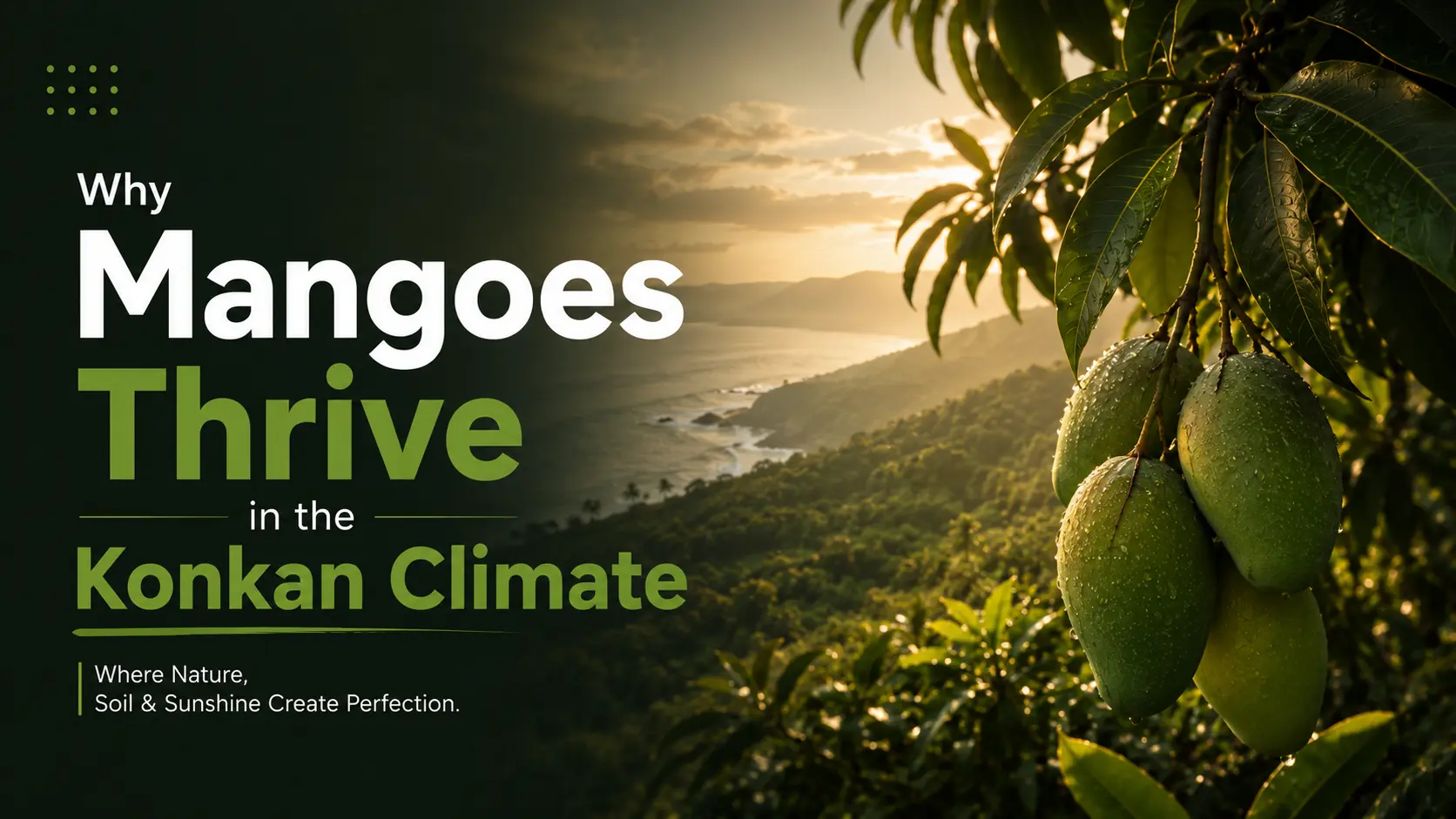
Some Places Grow Mangoes. Konkan Shapes Them.
There is a reason people don’t just ask for a mango. They ask for a Konkan mango. The distinction matters.
Across India, mangoes are cultivated in many regions. Different varieties flourish under different conditions. Yet few places have achieved the almost mythical reputation that the Konkan coast enjoys.
Mention Ratnagiri, Devgad, Raigad, or the broader Konkan belt, and conversations immediately shift toward flavour, aroma, texture, and authenticity.
For generations, farmers, traders, and mango lovers have recognized something special about this region.
But what exactly makes the Konkan climate so ideal for mango cultivation?
Is it the soil?
The rainfall?
The coastal influence?
Or is it something more complex?
The answer, as it turns out, lies in a remarkable combination of geography, weather patterns, and natural conditions that work together to create one of the most celebrated mango-growing regions in the world.
Understanding the Konkan Region
Stretching along India’s western coastline, the Konkan region is one of the country’s most distinctive landscapes.
Characterized by:
- Rolling hills
- Dense greenery
- Red laterite soil
- Abundant monsoon rainfall
- Proximity to the Arabian Sea
the region creates a natural environment that feels almost tailor-made for mango cultivation.
From Ratnagiri and Sindhudurg to parts of Raigad, mango orchards have become an integral part of both the economy and cultural identity of the region.
Yet the success of these orchards is not accidental.
It is deeply connected to the environment itself.
Why Climate Matters in Mango Cultivation
A mango tree can survive in many places.
Producing exceptional fruit is a different story.
Mango cultivation depends on a delicate balance of:
- Temperature
- Rainfall
- Soil conditions
- Humidity
- Seasonal transitions
Too much variation can stress the tree.
Too little variation can affect flowering and fruit development.
The most productive mango-growing regions tend to offer a stable yet dynamic climate that supports the tree throughout its growth cycle.
This is precisely where the Konkan climate stands out.
The Coastal Advantage
One of Konkan’s greatest strengths is its relationship with the Arabian Sea.
Large water bodies influence surrounding weather patterns in important ways.
The sea helps moderate temperature extremes, creating conditions that are generally more stable than inland regions.
This means mango trees are less likely to experience dramatic fluctuations that can interfere with growth cycles.
The coastal environment also contributes to:
- Balanced humidity levels
- Consistent air movement
- Reduced temperature stress
Over time, these seemingly small advantages play a major role in orchard health.
Nature, after all, rewards consistency. And the Konkan coast provides exactly that.
The Role of Rainfall
The monsoon is one of the defining characteristics of the Konkan landscape.
When the rains arrive, they transform the region.
Rivers swell.
Hills turn emerald green.
The earth absorbs enormous amounts of moisture.
For mango orchards, this seasonal abundance is incredibly important.
The monsoon helps replenish groundwater reserves and supports long-term soil moisture.
The wet season and dry season create a natural cycle that aligns remarkably well with mango growth and development.
This seasonal balance is one of the reasons mango farming in Maharashtra’s coastal belt has flourished for generations.
Why Konkan Soil Supports Healthy Orchards
Ask most people why Konkan mangoes are special and they will talk about the fruit.
Ask a farmer and they might talk about the soil.
Much of the region is known for its laterite soil, recognizable by its rich reddish colour.
This soil offers several natural advantages for mango cultivation.
It generally supports:
- Good drainage
- Strong root development
- Healthy aeration
- Long-term orchard stability
Good drainage is particularly important because mango trees dislike waterlogged conditions.
Roots need access to both water and oxygen.
The Konkan landscape naturally creates that balance.
This allows orchards to establish themselves deeply and remain productive over many years.
The Importance of Seasonal Variation
One of the lesser-known secrets behind successful mango cultivation is seasonality.
Mango trees respond strongly to environmental signals.
They need periods of active growth.
They also need periods of relative rest.
The transition between seasons helps trigger important biological processes, including flowering.
Konkan’s climate provides these natural cues without subjecting trees to harsh extremes.
The result is an environment that encourages healthy growth while supporting consistent orchard development.
How Humidity Influences Mango Growth
Humidity is often misunderstood.
Too much can create challenges.
Too little can also be problematic.
The coastal environment of Konkan helps maintain a balance that supports tree health.
Combined with good airflow and proper orchard management, humidity contributes to:
- Healthy foliage
- Improved growing conditions
- Better overall orchard performance
The key is balance. And balance is one of the defining characteristics of the Konkan ecosystem.
The Relationship Between Mango Trees and the Landscape
Perhaps the most fascinating aspect of mango cultivation in Konkan is how naturally the orchards fit into the landscape.
The hills, slopes, forests, and valleys all contribute to a broader environmental system.
Birdlife, seasonal changes, rainfall patterns, and local biodiversity all interact with the agricultural environment.
This connection is one reason why mango orchards in Konkan often feel different from large-scale industrial agricultural systems.
There is a sense of harmony between cultivation and landscape.
And that relationship continues to shape the character of the fruit itself.
Why Alphonso Mangoes Flourish Here
No discussion about Konkan mangoes would be complete without mentioning Alphonso.
Known for its aroma, texture, and flavour profile, the Alphonso mango has become synonymous with the region.
While genetics play an important role, environmental conditions are equally significant.
The combination of:
- Coastal weather
- Seasonal rainfall
- Suitable soil conditions
- Long-established farming traditions
creates an environment where Alphonso mango cultivation can thrive.
This is one reason the region continues to be celebrated as one of India’s most iconic mango-producing landscapes.
Modern Farming Meets Traditional Wisdom
The story of Konkan mango farming is not only about nature.
It is also about people.
Generations of farmers have developed a deep understanding of local conditions.
Today, modern agricultural practices are increasingly complementing that knowledge.
Techniques such as:
- Scientific orchard planning
- Efficient irrigation systems
- Canopy management
- Sustainable farming practices
- UHDP farming approaches
are helping improve productivity while respecting the strengths of the natural environment.
The future of mango cultivation will likely depend on this balance between tradition and innovation.
Neither alone is enough. Together, they create something powerful.
The Future of Mango Farming in Konkan
As agriculture evolves, one thing remains clear.
Location still matters.
Technology can improve efficiency.
Management can enhance productivity.
But nature remains the foundation.
And few places offer the combination of climate, soil, rainfall, and geography that Konkan provides.
This is why the region continues to attract attention not only from farmers, but also from those interested in sustainable agriculture, orchard ecosystems, and long-term land stewardship.
Because when the land, climate, and cultivation practices align, remarkable things can happen.
Key Takeaways
FAQs
The region offers a unique combination of coastal climate, seasonal rainfall, suitable soil, and long-established farming traditions that support mango cultivation.
The Alphonso mango is the variety most strongly associated with the Konkan region.
Yes. Seasonal rainfall helps replenish soil moisture and supports overall orchard health.
Much of the region is characterized by laterite soil, known for its reddish appearance and good drainage properties.
Climate, soil conditions, rainfall patterns, and local growing environments all influence the characteristics of the fruit.